Adrenal Glands
How this time might affect your adrenal glands and how to take care of your clients, and yourself best.I love to share with you a somewhat common symptom of adrenal fatigue that is seldom understood, and it is the presence of low back pain without any history of trauma, and the presence of a normal examination.
What are Adrenal glands?
Adrenal glands, also known as suprarenal glands, are small, triangular-shaped glands, they are no bigger than a walnut and are located on top of both kidneys.
The adrenal glands are a significant part of the endocrine (hormonal) system and produce a variety of hormones including (epinephrine) adrenaline and the steroids aldosterone and corti
The adrenal glands play a vital role in the body’s fight or flight/stress response. They generate stress hormones that activate physiological adaptations that are necessary to counteract changes in the external environment.
Adrenal fatigue is a commonly experienced syndrome in today’s world of stress and high energy. Even more in the time where we are living now, when we, not only individually but also collectively, are experiencing a long intense time of uncertainty which causes stress in many different ways.
If your cortisol level is either too low or too high, it sends messages throughout the body which affect your digestion, immune system, nervous system, and all your other hormones.
A little stress is completely normal, and good for us – this is something everyone has. The important thing is your body’s ability to recover from stress. If your body doesn’t have the chance to recuperate from the damage caused by the stress, we don’t give the adrenal glands a chance to rest and recover by giving them a break from the stressful situations that stimulate them, we are highly likely to start feeling not so well.
Symptoms of overworked adrenal glands include everything from fatigue and low energy, to insomnia, dizziness, blood sugar irregularities, muscle weakness, frequent infections, and mood changes.
As a Transformational Bodyworker we need to understand that adrenal overload can cause contraction in the area of the low back.
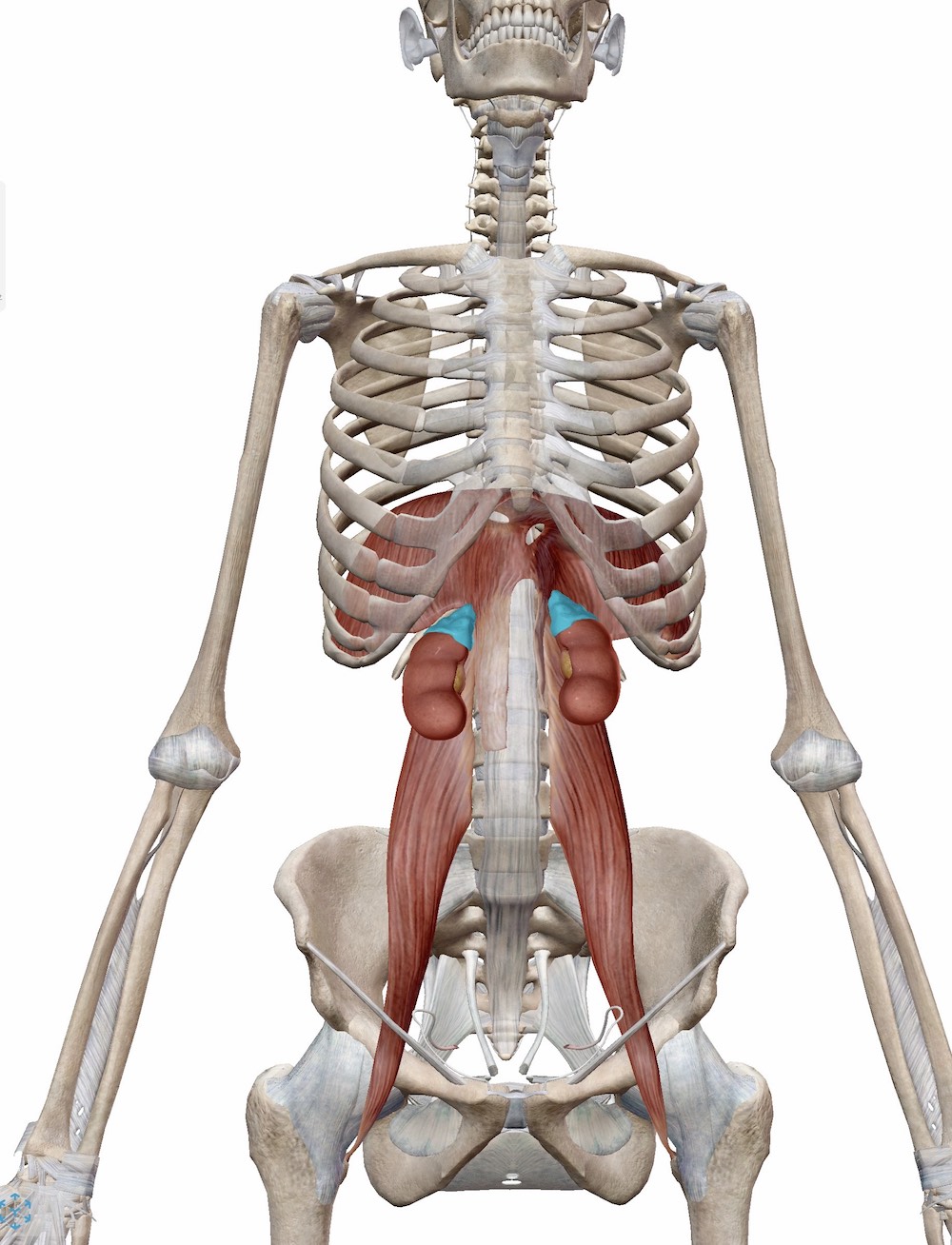
Have a look at the image below. You will see in blue the adrenal glands on top of the kidneys.
Can you see how the psoas muscles as well as the diaphragm are connected in this area?
Now imagine… this whole area works together, they are not separate parts of our body, they are innately and intimately connected.
A very simple and brief overview to give you some basic insights:
Our psoas muscles respond to stress and tension with contraction. It is a part of our fight or flight response. Long term stress and tension which doesn’t get released keeps this part in heightened state of alert, ready for action.
Psoas, as you see in the image, connects to our low back vertebras. Pulling this area in contraction.
Our fascia, our connective tissue, connects our diaphragm and our psoas muscle. Contraction in this area limits the ability for our diaphragm breathing to function optimum. Which causes more upper/ chest breathing. When our breathing is affected our nervous system gets affected, diaphragm breathing supports the tones of our Vagal Nerve. A healthy vagal tone supports us to be more relaxed and supports a healthy coping system. Chest breathing increases anxiety feelings. Which affects our adrenal glands.
As you see, our adrenal glands are directly connected in this area. Facial contraction causes more stress in this area and a vicious circle (a sequence of reciprocal cause and effect in which two or more elements intensify and aggravate each other, leading inexorably to a worsening of the situation) starts to happen.
Besides our hormones getting out of balance a dense pulling in our whole low back area starts to occur from all the described components. Our fascial tissue is contracted, our back muscles get tense and we start to experience dull pain in our low back.
Bodywork/ massage is not intended to diagnose or cure adrenal fatigue, and appropriate testing, assessment is needed by a GP, Doctor or specialist to determine the underlying pathology of why this is occurring. However Bodywork/ massage can support the body and the changes it goes through, physically and emotionally.
So what can be done to restore the delicate balance provided by healthy adrenal glands? Firstly, even more in these times, be kind to yourself. This might seem simple, but is very hard for most people. Lighten the expectations that you have of yourself and take time out of each day for some “me time.” While we cannot live a life completely free of potentially stressful situations, we can certainly change our capacity to cope with those challenges we do face.
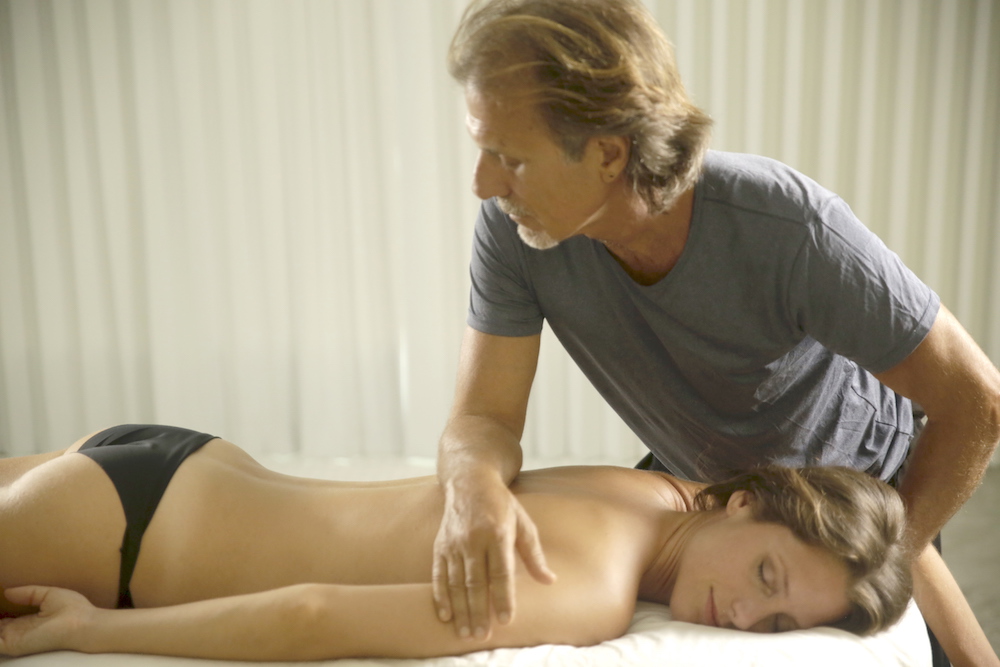
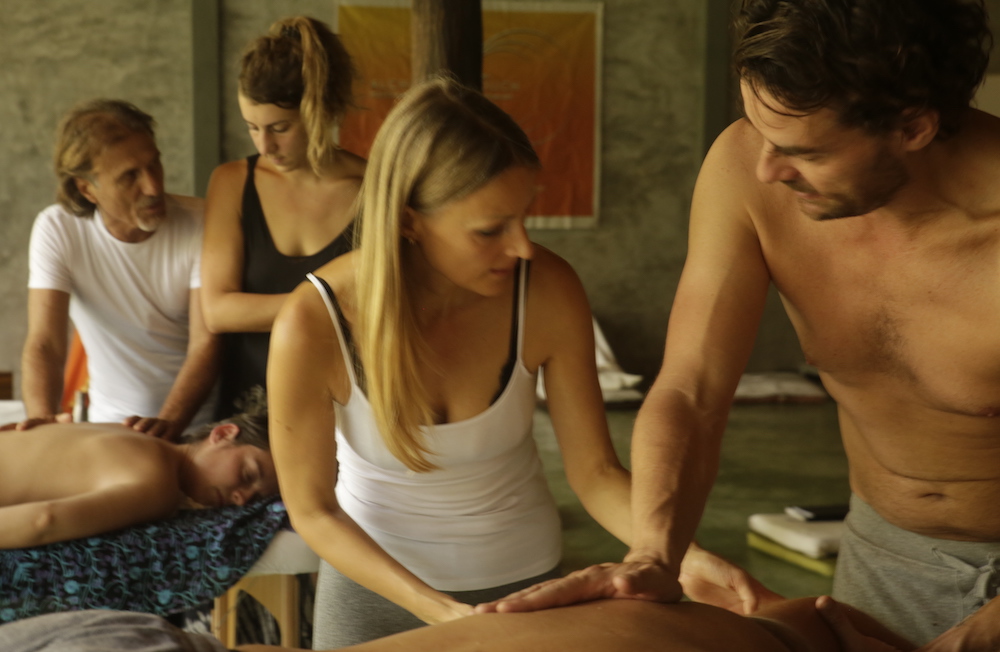
Bodywork/ massage can be an extremely helpful part of maintaining a healthy and balanced lifestyle, and in lowering your stress levels:
Bodywork/ massage can help create changes in the endocrine system where hormones called neurotransmitters are formed. They communicate instructions that control systems of the body by regulating body functions. As soon as a bodywork/ massage starts, the sensory nerves are stimulated and send messages to the central nervous system.
Depending on the type of bodywork/ massage and techniques used, the parasympathetic nervous system will relax into the rhythm provided by the therapist. This allows the stressor hormones to relax, regenerate and work towards bringing the body back to a homeostatic state.
Bodywork/ massage therapy has been extensively studied and discussed in medical literature. It lowers cortisol levels, and increases serotonin and dopamine – perfect for defusing that adrenally fatigued brain on high alert (mistakenly thinking that it’s being chased by an angry bear) so that your hormones can come back to a more normal balance. (source: The International Journal of Neuroscience).
Furthermore, myofascial release helps the contracted facial tissue around and in the muscles and around the organs and bones to open up. Creating space to breathe, let go, realising and restoring our chi energy flow.
When giving a bodywork session it is important to understand all these aspects of our body-mind organism. Knowing which techniques to use when, as well how to use the techniques perfectly customised for each individual. And simultaneously going beyond the techniques, creating a transmission of meditation, engaging quantum healing for far reaching effects of health and wellbeing.
Alchemy of Touch loves to support the embodied understanding of our practitioners. Creating a ripple effect of supporting a mindful lifestyle and healing through touch.
Join Our Revolution – Our Revolution Of Touch!
With love and devotion,
Anouk Devi